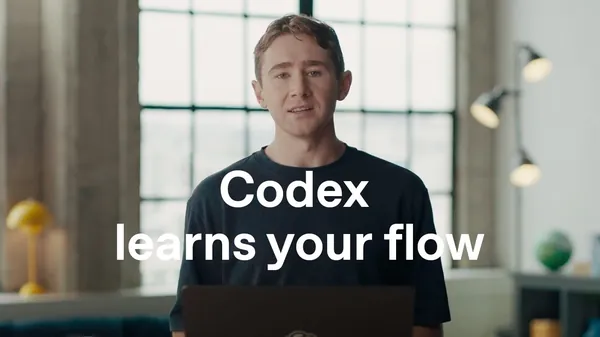
Video
Record \u0026 Replay in Codex
2026.06.19
·YouTube·by igor#AI#Automation#Codex#Productivity#Skills
Key Points
- 1The paper introduces a feature where Codex learns repetitive workflows by observing a user’s actions in real-time, such as publishing YouTube videos.
- 2Once a process is recorded, Codex internalizes the specific metadata sources, file organization, and software settings to replicate the task independently.
- 3This capability allows users to automate complex, multi-step routines across various applications without needing to manually prompt every detail each time.
The paper introduces a functional demonstration of an AI agent, referred to as "Codex," capable of "Learning-by-Watching." This paradigm shifts the interaction model from explicit prompting to observational learning, allowing the model to acquire complex, multi-step workflows by mirroring human actions within a software environment.
Core Methodology
The methodology relies on an agentic framework that leverages "computer use" and "browser use" capabilities. The process follows a two-phase architecture:- Observational Learning Phase:
- Autonomous Execution Phase:
- Data Orchestration: Integrating with external tools (plugins) or file systems to map new inputs to the learned schema: , where represents the required field in the UI.
- Agentic Navigation: Using computer-use capabilities to interact with the target software's interface (e.g., YouTube Studio). It navigates through menus, performs text entry, and executes file uploads without the need for API-level integration, mimicking the human's exact workflow.
- Verification Loop: The agent implements a post-action validation step to ensure that the persistent state matches the intended state : .