Tinker
Key Points
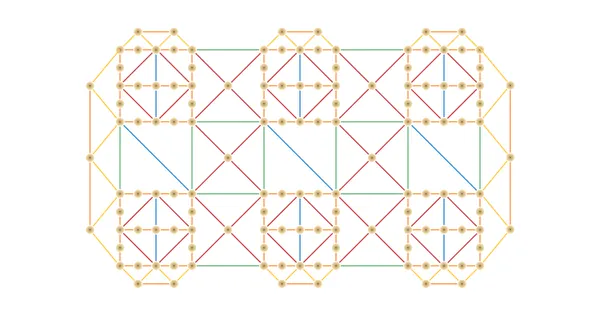
- 1The TinkerToy Computer was invented by Daniel Hillis and Brian Silverman.
- 2Tinker is introduced as a training API for researchers, designed to offer control over model training and fine-tuning while managing infrastructure.
- 3This API supports core machine learning functions, specifically mentioning `forward_backward` for performing forward and backward passes to accumulate gradients.
The document introduces two distinct concepts: the "TinkerToy Computer" and the "Tinker" API.
The "TinkerToy Computer" is identified as an invention by Daniel Hillis and Brian Silverman. The provided text offers no further details regarding its design, functionality, or purpose beyond its inventors.
The primary focus of the document shifts to "Tinker," described as a training API designed specifically for researchers. Its core value proposition lies in enabling users to maintain precise control over every aspect of model training and fine-tuning processes, while the underlying computational infrastructure is managed and handled by the service provider. This abstracts away the complexities of infrastructure setup and maintenance, allowing researchers to concentrate on algorithmic development.
Regarding its core methodology, the document highlights a key function provided by the API: forward_backward. This function encapsulates the fundamental operations required for optimizing deep learning models. Specifically, it performs:
- Forward Pass: The process where input data is fed through the neural network to produce an output (e.g., predictions or activations). This typically involves computations like matrix multiplications and activation functions.
- Backward Pass: Following the forward pass, this step involves the computation of gradients of the loss function with respect to the model's parameters (weights and biases). This is typically achieved using the backpropagation algorithm. For a given loss function and model parameters , this phase computes .
- Gradient Accumulation: The function is explicitly stated to accumulate the gradient. This implies that gradients computed from one or more mini-batches are summed up or averaged before a single parameter update step is performed. This technique is often used to simulate larger batch sizes than memory constraints might otherwise allow, or to stabilize training. If represents the gradient computed for mini-batch , accumulation means computing over several mini-batches before updating parameters.
The document also hints at the existence of "four functions" that facilitate the user's ideas, with forward_backward being one example detailed. However, the other three functions are not specified within the provided text.