Service
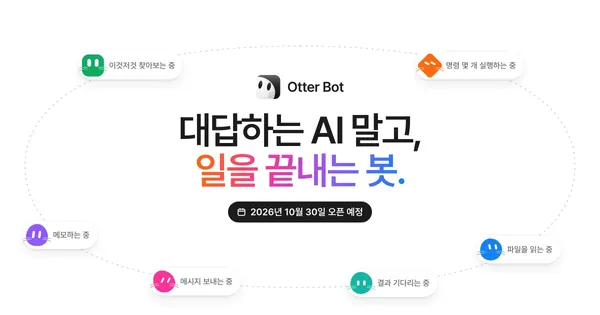
Otter Bot · AI Bot Team That Gets Things Done
usefullabs (쓸모랩)
2026.10.26
·Web·by Mineru#AI Agent#Automation#LLM#Team#Workflow
Key Points
- 1Otter Bot is an AI agent platform that enables users to manage multiple specialized bots, each equipped with its own virtual Linux environment to perform tasks like terminal operations, file management, and browser automation.
- 2Users can integrate their existing AI subscriptions—such as Claude or ChatGPT—to power these agents, allowing for complex, multi-step workflows that combine sequential and parallel processing through a centralized group chat interface.
- 3The platform emphasizes user control and security by requiring manual approval for critical actions, isolating agent environments in sandboxed Docker containers, and restricting file access to prevent unauthorized data exposure.
Otter Bot is an AI-driven agent orchestration platform designed to automate complex, multi-step workflows by allowing users to delegate tasks to autonomous "bot teams." Unlike standard chat-based AI interfaces that simply provide information, Otter Bot executes real-world actions, such as file manipulation, software execution, and browser interaction, to complete tasks from start to finish.
Core Methodology and Technical Architecture
- Agentic Execution Environment (Bot Computers):
127.0.0.1 using randomized VNC passwords and do not mount the host file system directly.- Workflow Orchestration:
- Computer Use and Vision:
browser_click or browser_type. All interactions are logged, creating a verifiable audit trail of tool usage.- Integrations and BYOK (Bring Your Own Key):
- Safety and Human-in-the-Loop (HITL) Controls:
- Scope Limitation: Local tools are restricted by
realpathto operate strictly within the defined working folder, preventing access to sensitive directories like~/.ssh. - Permissioning: Sensitive operations, such as system commands, email dispatch, or financial transactions, trigger an explicit approval card. Users must interact with these "Commit/Cancel" prompts to authorize execution.
- Isolation: The UI bridge uses
contextIsolationand standard web-sandbox technologies to prevent malicious scripts from interacting with the host OS.
- Routine Management: