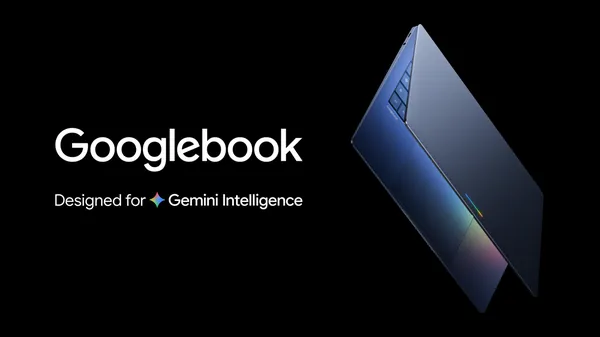
Introducing Googlebook, designed for Gemini Intelligence
Key Points
- 1Google is launching Googlebook, a new laptop category designed for Gemini Intelligence, evolving from Chromebooks to integrate AI deeply into the user experience.
- 2Key features include the "Magic Pointer" for contextual suggestions directly from the cursor and "Create your Widget" for custom, AI-generated dashboards that organize information from various Google apps.
- 3Googlebooks offer seamless integration with Android phones for accessing apps and files, boast premium hardware from partners like Acer and Dell with a distinctive "glowbar" design, and are set to launch this fall.
Google is introducing Googlebook, a new category of laptops fundamentally designed as an "intelligence system" rather than a traditional operating system, signifying a paradigm shift from the cloud-first focus of Chromebooks to an AI-first architecture. This system deeply integrates Gemini Intelligence to provide pervasive, proactive, and context-aware assistance directly within the user's computing experience.
The core methodology is predicated on real-time, AI-driven interaction, exemplified by two primary features: "Magic Pointer" and "Create your Widget." The "Magic Pointer" redefines the traditional cursor as an intelligent, reactive interface element. Developed with Google DeepMind, it embeds Gemini's analytical capabilities directly at the user's point of interaction. Upon "wiggling" or hovering the cursor over on-screen content, Gemini performs immediate contextual analysis, interpreting visual and semantic cues to generate and display relevant, actionable suggestions. For example, hovering over a date in an email triggers AI-powered options to schedule a meeting, or selecting two distinct images, such as a room and a piece of furniture, prompts Gemini to visualize their combined arrangement. This mechanism aims to significantly reduce user interaction steps and cognitive load by preemptively offering highly pertinent actions based on observed context and inferred intent.
Complementing this, "Create your Widget" extends the AI's utility to dynamic interface personalization. This feature allows users to generate bespoke widgets purely through natural language prompts. Gemini leverages its capabilities to search the internet and integrate with Google's proprietary applications (e.g., Gmail, Calendar) to construct highly personalized dashboards. For instance, a prompt for a family reunion in Berlin can result in a consolidated widget displaying flight information, hotel reservations, restaurant bookings, and a countdown timer, creating a hyper-personalized desktop environment. This functionality demonstrates AI-driven aggregation and dynamic content presentation based on complex user requests.
The underlying software architecture for Googlebook combines elements of the Android tech stack with ChromeOS. This hybrid approach enables faster innovation cycles, leverages the extensive Google Play app ecosystem, and facilitates a seamless multi-device experience. Googlebook prioritizes fluid transitions between the laptop and Android smartphones, allowing users to instantly access phone applications (e.g., ordering food, completing language lessons) and files (via "Quick Access") directly from the laptop's interface without explicit data transfers, enhancing productivity by minimizing workflow disruptions.
Hardware development for Googlebook involves collaborations with industry-leading partners (Acer, ASUS, Dell, HP, Lenovo), emphasizing premium craftsmanship, diverse form factors, and a distinctive "glowbar" design element that serves both aesthetic and functional purposes. This integration of advanced AI capabilities with robust, premium hardware aims to redefine the laptop as a deeply intelligent and responsive personal assistant for the future.