Video
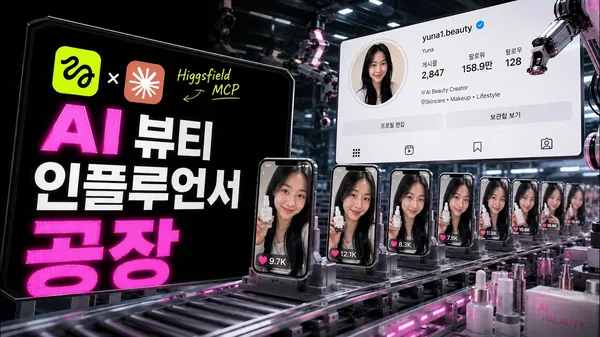
I Made a Mass-Produced AI Beauty Influencer (ft. Higgsfield MCP)
2026.06.29
·YouTube·by Leon#AI#Claude#Higgsfield#Influencer#MCP
Key Points
- 1The video demonstrates how to integrate the Higgsfield platform with Claude using MCP (Model Context Protocol) to streamline the creation and operation of AI influencers.
- 2By leveraging Higgsfield's image and video models alongside its "Element" and "Marketing Studio" features, users can maintain character consistency and generate realistic product advertisements.
- 3The presenter highlights advanced capabilities such as virality prediction and automated content workflows, suggesting that AI agents can efficiently manage social media accounts for potential commercial partnerships.
This paper details a workflow for creating and operating an AI influencer using the Higgsfield AI platform integrated with Claude via the Model Context Protocol (MCP). By leveraging these technologies, a user can automate the generation of consistent AI characters (Elements), produce beauty-related marketing content, and predict the virality of social media posts.
Core Methodology and Integration
The primary technical framework involves connecting Claude to Higgsfield’s suite of generative models—including Nano Banana for image generation and Seedance for video synthesis—without requiring manual interaction with individual platform tools.- MCP Connection: The integration utilizes the Model Context Protocol, where a custom connector is configured in Claude by inputting a unique remote server URL provided by Higgsfield. This allows Claude to function as an AI agent that invokes specific Higgsfield functions (image, video, and audio generation) based on natural language prompts.
- Character Consistency (Elements): To maintain the identity of an AI influencer (e.g., "Yuna"), the user registers a specific character as an "Element." By generating images of the character from various angles (front, left, right), the user creates a refined ID that ensures consistent facial features across different poses and scenarios.
- Image-to-Image and Transformation: The workflow employs an Image-to-Image approach for content creation, such as "before-and-after" beauty transformations. By using a baseline image as a reference media and applying a secondary prompt (e.g., applying makeup), the system creates a transition effect. This is then rendered into video using specialized models, often utilizing start and end frames to interpolate the transformation.
Marketing and Viral Analysis
The paper highlights advanced features designed for commercial utility:- Marketing Studio: This feature enables the integration of specific products into influencer content. By registering a product image as a unique "Product ID," the system can synthesize the AI influencer holding the item while maintaining high fidelity to the original product label and branding.
- Virality Prediction: The platform includes a predictive function that assesses the potential reach of short-form content. This mechanism is based on Meta’s research into human neural response; it analyzes a video to provide a "virality score," simulating how a human brain might react to the visual stimuli, thereby enabling creators to optimize content before publication.